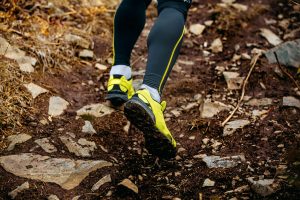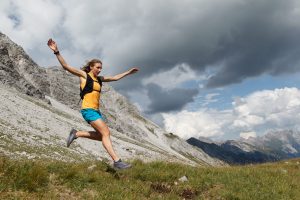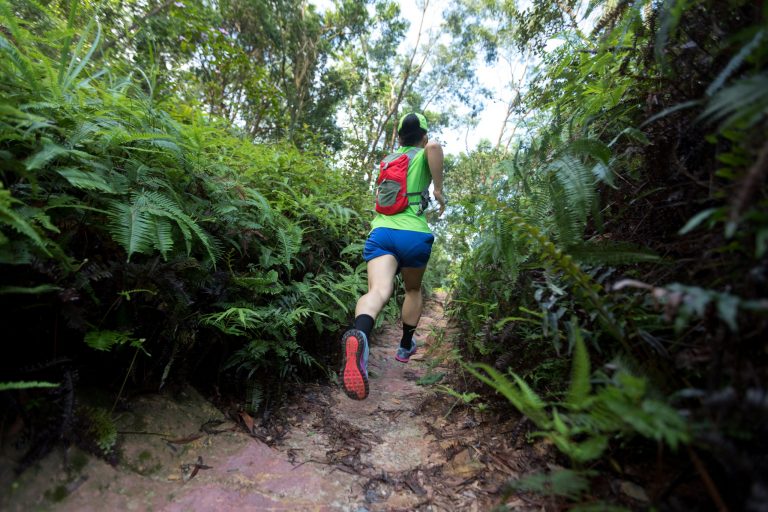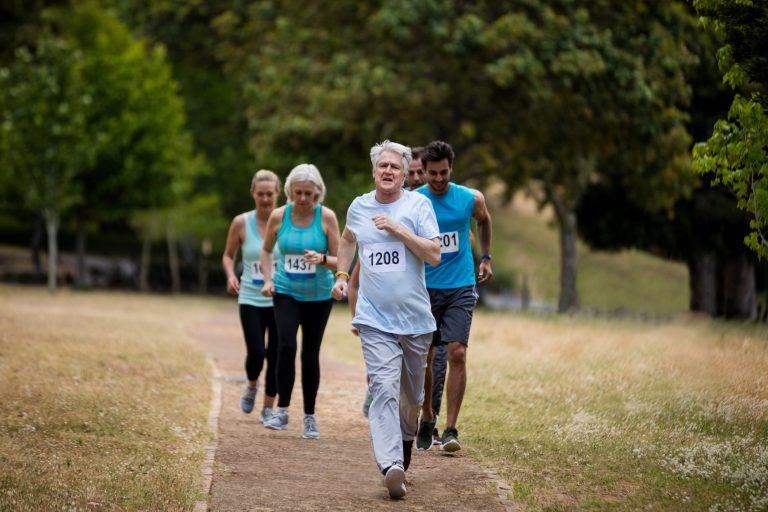


Trail running is a specific form of running that requires sturdy footing as well as stamina. Those who are just starting out may find certain trails easier than others. Trails that are designed for beginners often have acclimate weather conditions, well-marked paths and a mild incline.
The Right Pace For Trail Running
A runner who already has experience running on asphalt may wonder about the pace. There are a few similarities between on-road running and trail running such as moderating breath and monitoring stamina. While weather may play a factor in road running, it has much more of an impact on the trail.
Depending on the climate and terrain, the ideal pace will change with trail running. When running on an incline, cold weather that can involve ice or snow should be taken into consideration. On average, most trail runners run at a slower pace.
For hills that are especially steep, many runners choose to walk. This can be a safety precaution or to preserve energy. A power-walk can actually lead to a faster overall time. When running downhill, quad muscles may involuntarily contract without prior stretching. Starting out with small hills is best for beginners.
The Best Beginner Trails in North America
North America has a variety of terrains to work with as a runner. Depending on the state or country, flat runs or steep mountains are both valid options. Some of the most beautiful trails for beginners can be found all over America.
1.) Broken Hill Trail. Located in San Diego, California, this path is perfect for beginning trail runners. This path consists of a 2.5 mile loop in Torrey Pines State Natural Reserve. It can be run at a fast pace and is easy to navigate. The view also consists of wildflowers and the Pacific Ocean.
2.) Phoenix Lake Loop. This trail is also found in California. Accessible from the Mount Tamalpais Watershed park in Marin Headlands, this trail is safe and beginner-friendly. Since the path is on a loop, runners can continue running for as long as they want before heading back to the car. Parking is also convenient for those who may not know their own stamina yet.
3.) Cochran Shoals Trail. Cochran Shoals path follows the Chattahoochee river in Atlanta, Georgia. The trail consists of a 5k loop between meadows and marshlands. The trail itself is wide and there are few hills or steep inclines. The trail is on both dirt and gravel for beginning trail runners who want to experience different terrain.
4.) Bear Creek Lake Trails. Bear Creek Lake Park is located in Denver, Colorado and offers a wide array of trails. Trail running can be done on pavement or dirt depending on the runner’s preference. The GBear Creek Lake Trail Loop is 9.4 miles and allows dogs. The best time of year to run this trail is from April to October.
5.) Cedar Lake. The Cedar Lake trail runs 12.5 miles along Minneapolis. With lakes surrounding the area, this view is both scenic and accessible from the city. Depending on the area of the trail, individuals may run on pavement or dirt considering the proximity of downtown Minneapolis. This trail is usually done in the late spring and early summer months to avoid the cold.
6.) Ko ‘Olina Lagoons. This 3 mile trail is located in Hawaii. The trail is approximately 2 miles of lagoons and sandy beaches. Much of the path is paved, but not all of it. This is ideal for beginners who are unfamiliar with dirt trails and are exploring new terrain. Along with island nature, runners can glimpse resort life as well.
7.) Lake Agnes Trail. Lake Agnes Trail is a 4 mile path in Alberta, Canada. Dogs are allowed on this trail and there is a waterfall along the way. Runners pass by Lake Louise where they can see wildflowers and exotic birds. The trail is partially paved for beginning runners who have limited experience with dirt ground or gravel.
Various Types of Terrain
Running on several kinds of terrains will give a runner experience with separate muscle groups. Some terrains may be naturally easier for one person and not another. Depending on body shape, gait, heart rate and personal preference, terrains can change the way runners experience the sport.
Grass
Running on a soft surface creates less wear and tear on the body. This means the body recovers faster once the trail is over. Although the ground is softer, this does not necessarily mean it’s easier. Grass tends to make runners work harder because each step requires more effort.
Hills
Incline running is ideal for muscle-building. The hamstrings get an especially difficult workout running up hills. Running downhill, however, requires shortening the stride and pace. While both inclines and declines increase muscle growth, the speed must be taken into consideration before planning a run.
Dirt
Dirt trails are among the most common. Because they are dynamic and can involve a variety of surfaces, this can be the most fun and challenging type of run. Dirt is, however, easier on the joints than asphalt. Foot adjustment is necessary for roots or rocks and often engages different muscles in one run.
Tips For Beginners
Trail running requires focus. If a runner is not paying attention they can potentially injure themselves in a fall or lose track of time or location. When just starting out, paying attention to body position is key.
Foot placement is critical when running through the woods or rocky terrain. To sustain balance throughout the entire trail, many people choose to practice additional exercises. Core strength training is one way to create a stable presence while running. Exercises or stretches that engage the abs and upper thighs can help with this.
Starting slowly is recommended. Since many runners initially pay attention to where their feet are in relation to their body or the ground, this can become disorienting throughout the run. By running at a slower pace, beginning runners can get a feel for how to handle different types of surfaces.
Conclusion
Depending on the trail, a run can be a relaxing experience or extremely challenging. Loop trails with shorter distances and smaller inclines are usually designed for beginning trail runners. Once a runner has a firm sense of the terrain and style they prefer, choosing the right trail is easy.