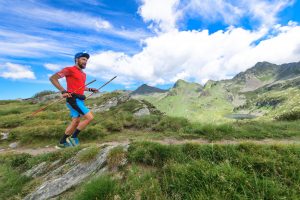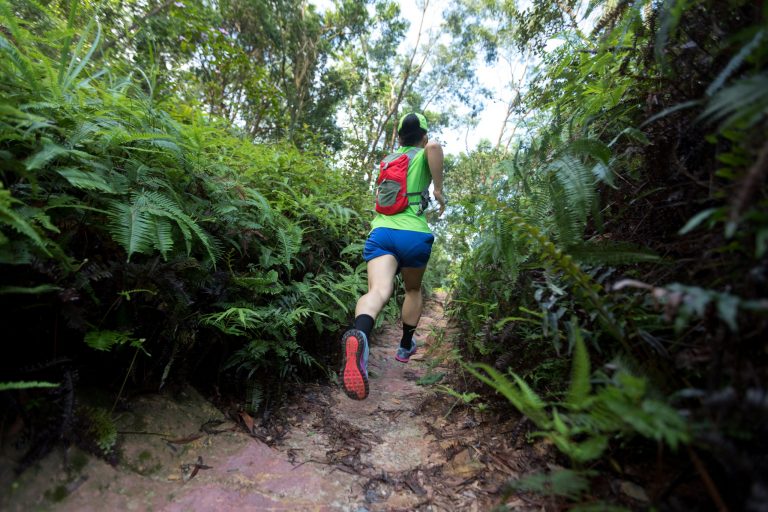


Trail running requires core strength as well as leg strength. While steep hills are usually conquered by advanced runners, there are many other variables in addition to just these strengths. Agility and focus are two primary skills needed when running on a trail.
What Makes An Advanced Runner?
An advanced runner can be classified in several ways. It takes time and practice to become quick and stable as a trail runner. Depending on the individual’s balance, age and background, this can take months or years to master.
Advanced trails are rated by the following characteristics:
- Incline
- Terrain
- Distance
- Climate
The climate of a particular area influences how much strength and focus is needed. Slippery terrain from either ice or rain will slow many runners down. Cold weather can also affect a runner’s ability to breathe correctly throughout the entire trail. Challenging trails may be tough, but are often the most rewarding.
The Top North American Trails For Advanced Runners
America’s climate, population and terrain is all subject to change depending on the location.
1.) McKenzie River Trail. Located in Eugene, Oregon, this 27 mile trail extends throughout the forestland. Multiple facets of this trail keep the run interesting. The McKenzie River Trail includes sharp turns, log bridges and steep inclines. In addition to its challenges, this trail also leads to multiple hot springs.
2.) Kalalau Trail. The Hawaiian island of Kaui showcases rainforests and sea cliffs for experienced runners. The Kalalau trail is known for its ability to access the Na Pali Coast. Although it is only 11 miles, the climate can make this run difficult. Late afternoon storms are known to occur throughout much of Hawaii. The trail begins at Ha’ena State Park and cuts through several valleys before reaching Kalalau beach. Waterfalls, beaches and ancient Hawaiian ruins can be seen from this path.
3.) Lower Nanamocomuck Trail. The Lower Nanamocomuck trail is approximately two hours north of Boston in North Conway, New Hampshire. The trail begins at a restored New England bridge just outside the mountain range. The entire trail is 7.5 miles that starts with a gravel path. The trail can become muddy from the Swift River, but does have large rocks in addition to the marshy section.
4.) Palos Valley Trail. The valley trail systems in Palos Park, Illinois are located just outside Chicago. Throughout multiple forest preserve parks, trails cover more than 30 miles. Most of the trails wind their way through forests and deep ravines. Lakes and open meadows can be seen throughout the path. For advanced runners, the Maple Lake Loop covers 12 miles of terrain.
5.) Mesa Trail. Mesa Trail is close to the city of Boulder in Colorado. This area is home to approximately 200 miles of trail routes. The Mesa Trail is a specific route that spans 7 miles around Flatirons mountain facades. At the top of the trail, runners can look out over the 8.144-foot Green Mountain. Many marathoners and triathletes use this trail as a training path for strength and endurance.
6.) Berryman Trail. Located in Potosi, Missouri, this trail is a rocky single-track. It winds its way through the low shoulders of the Ozark Mountains and lower Midwestern forests. One of the reasons advanced runners love this trail is for its mix of scenery. The Berryman Trail is 24 miles and offers shaded woods, creeks and rocky terrain.
7.) Finger Lakes Trail System. In Hector, New York, the Finger Lakes trail system has dozens of different paths to choose from. Trails are found across south-central New York with a combined 950 miles worth of routes. Intersecting trails can be found between Seneca and the Cayuga Lakes that offer ravines, forests and even gorges.
8.) The Cory Pass Trail. Located in the eastern end of the Bow Valley Parkway in Canada, this loop provides rocky terrain. The Cory Pass starts with a steep incline and gradually turns into a rolling single track. Gargoyle valley is worth climbing only if an individual is familiar with its boulder field.
9.) The Long Trail. The Long Trail is 273 miles through Winhall, Vermont. The length of the route spans from the Massachusetts state line to the Canadian border. Running any part of this trail can be a powerful journey through peaks and forest. This trail is known for its sharp inclines and can increase muscle mass even while walking.
10.) Cumberland Trail. Cumberland Trail is a series of ridges and gorges located in Chattanooga, Tennessee. Many runners finish individual sections of the trail instead of the entire path. The 10.2-mile section near Mullens Cove Loop is a highly-coveted area for experienced trail runners. There are creek crossings and climbing rocks for a variety of terrain.
11.) Ice Age National Scenic Trail. In LaGrange, Wisconsin, this trail will be a 1,200 mile route once it’s completed. Created from ancient glaciers, this trail showcases rare geological areas. The Kettle Moraine State Forest offers 600 miles of trail segments that feature deciduous groves, ponds and prairies.
12.) Laurel Highlands National Scenic Trail. This 70 mile footpath is found in Ohiopyle, Pennsylvania. It stretches through the Laurel Ridge near the southwestern region of Pennsylvania. Views consist of natural forest and the Youghiogheny River. This trail is specifically known for the ultra-distance races. Some of these races have dated back to the 1980s.
Advanced Trail Tips
Advanced trails can be difficult even for experienced runners. Before choosing a trail, research should be conducted for preparation. If a trail description does not list the exact mileage or elevation, state park guides are often available. Maps may also be necessary for specific trails. Rocky terrains that require special gear or specific foot support will likely prove challenging. For long trail runs, a water bottle and heart rate device are recommended.