
Causes
Facet joint irritation
Vertebrae are the building blocks that make up the spine, and they are joined together by discs at the front and back. Running sometimes could irritate those disks, which result in inflammation and pain.
Sacroiliac joint dysfunction
Sacroiliac joints are a pair of joints located on each side of the lowest part of your back, above the buttocks. Since they lie next to 2 knobby nits of the bone in your lower back, they are hard to find, but there are two dimples (dimples of venus) that overlie those bones.
When you run and land harder on one leg than the other one, there could be excessive pressure through one of those bones, which could irritate it, causing pain and inflammation.
Weak back
If you have a weak back, it could result in a loss of control as you run. Lower back pain when running could also be a result of weak abdominal muscles. Having weakness in your back and abdominal muscles makes the lower back vulnerable.
That is because as you tire from running, the weak muscles cannot control your movement, which leads to stress and pain in the spine.
Myofascial trigger points in your lower back muscles
Having weak muscles could either cause the muscle to cramp up completely or cause small sections of the muscles to cramp up. When small muscle parts cramp, it results in small knots of very tight muscles, called trigger points.
That causes mild to severe lower back pain, which is not easy to stretch out.
Feet problems
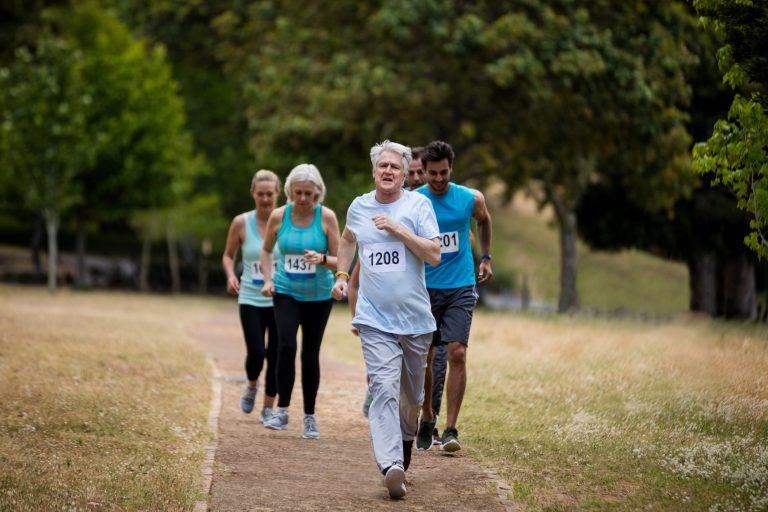
How you run could be the reason you are having back pains. That is because using the wrong running technique could exert a lot of pressure on your lower back muscles and spine.
Prevention
Strengthen your core
Weak muscles are one of the major causes of lower back pain when running, which is why you should do exercises to make them stronger. A strong core helps keep you balanced and upright as you run and also absorbs the impact of your run.
Some of the exercises to strengthen your core include resistance training, pushups, lower back rotational stretches, crunches, knee-to-chest stretches, planks, and squats.
Improve your hip mobility
Hip flexors are the muscles that connect the lumbar spine and pelvis. They consist of the iliacus and psoas, which work together to move the legs up to the body and flex the hip joints. Sitting for too long could have the muscles in a shortened position, causing them to tighten.
When you stand, the muscles go into a lengthened position. With tight muscles, they pull your pelvis forward into an arched position, which causes chronic lower back pain when you run.
Some of the exercises to improve the mobility of your hip muscles and joints include lunges, side-lying leg raises, and squats.
Use the right running technique
Avoid running techniques that stress your knees and ankles, as that could cause stress on your lower back.
“Flat feet” is one of the major improper running techniques that trigger the pain. That means that when you run, the sole of your feet hits the ground flatly.
Instead of that, you should let the heel make initial contact and, in a rolling motion, let the rest of the foot follow.
Use the right shoes
Apart from using the wrong running technique, using the wrong shoes also exerts a lot of pressure and strain on your lower back muscles and spine, which causes inflammation and pain.
Ensure that the shoes have a level sole and are not worn out. You should also run in shoes that have good support and that are neither too big nor too small.
Stretch
Regularly stretching the tendons, ligaments that support your spine is important in preventing lower back pain as you run. It helps reduce tension in your muscles that support the spine, which could make the pain worse.
It also helps improve your range of motion and mobility, which reduces the stress and pressure on your lower back. Stretching also helps prevents you from running asymmetry because of the muscles of one side being tighter than those on the other side.
Wear compression clothes
Compression clothes help give extra support to your spine and back muscles, reducing pressure and stress.
Run on the right terrains
Avoid running on hills because running downhill could exert a lot of pressure on your lower back.
Treatment
Massage
Massaging the lower back helps stretch out the sore muscles. It also increases blood flow to the affected muscles, which increases the supply of oxygen and the nutrients the muscles need to recover.
Massage also helps break down any lactic acid in the muscles that could be causing the soreness and pain. You can use a massage chair, neck massager, or have someone massage you. Use essential oils when massaging, especially those with capsaicin.
Cold therapy
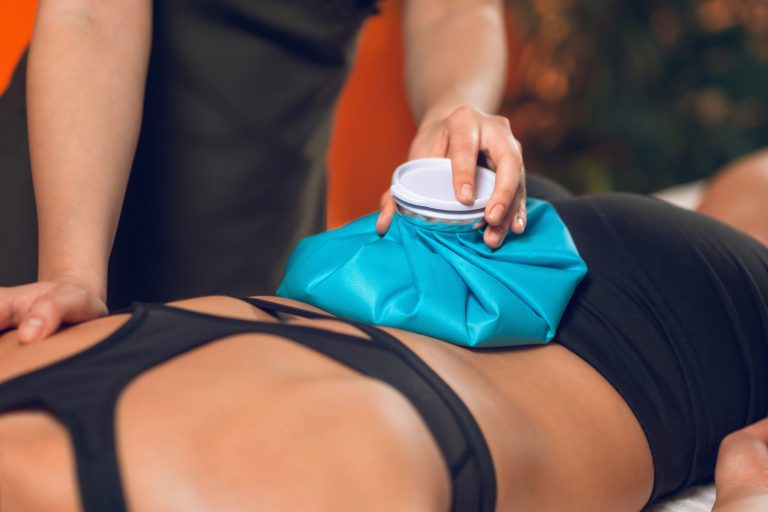
Cold therapy helps relieve pain in the muscles by numbing the muscles and reducing nerve activity. It also helps reduce blood flow to the muscles, which helps reduce swelling and inflammation that may be causing the pain.
You can use either a wet or dry cold compress. Wet cold therapy includes having an ice massage, ice bath, or using coolant sprays. For dry cold therapy, you can wrap a bag of ice cubes in a towel and place it on the affected muscles.
Heat therapy
Unlike cold therapy, heat therapy works by increasing blood flow to the affected muscles, which helps increase nutrient and oxygen supply to promote recovery. It also helps reduce muscle spasms, muscle tightness and soothe discomfort.
You can use either dry or wet heat. Dry heat includes saunas, dry heating packs, and heating packs. Wet heat, on the other hand, includes hot baths, steamed towels, and moist heating packs.
Salt baths
Before diving into the bath tab, add Epsom salt to your bathwater. Your body absorbs the minerals in the salt, which helps soothe the pains.
Over the counter medication
Consider buying over-the-counter anti-inflammatory and pain medication. Consult with the pharmacist and describe the level of your pain.
Visit the doctor
If the pains persist and become worse, visit a doctor because it could be a sign of an underlying issue. The doctor takes tests and X-rays to determine the cause of the pain, prescribes medication, and gives you advice on how to avoid future pains.